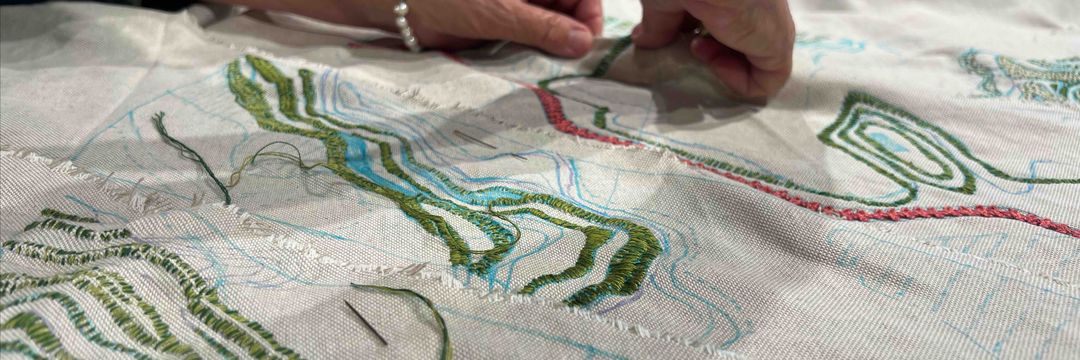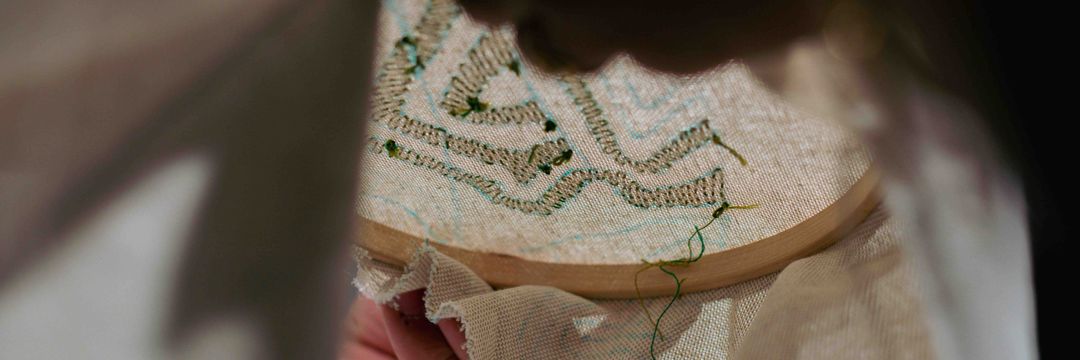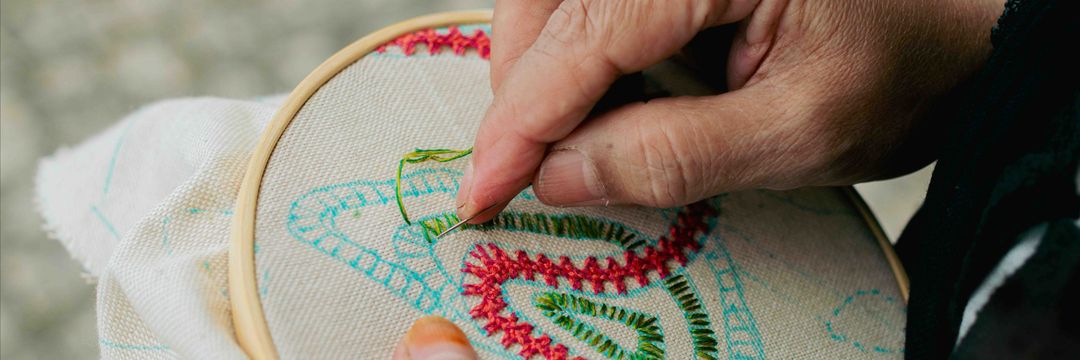

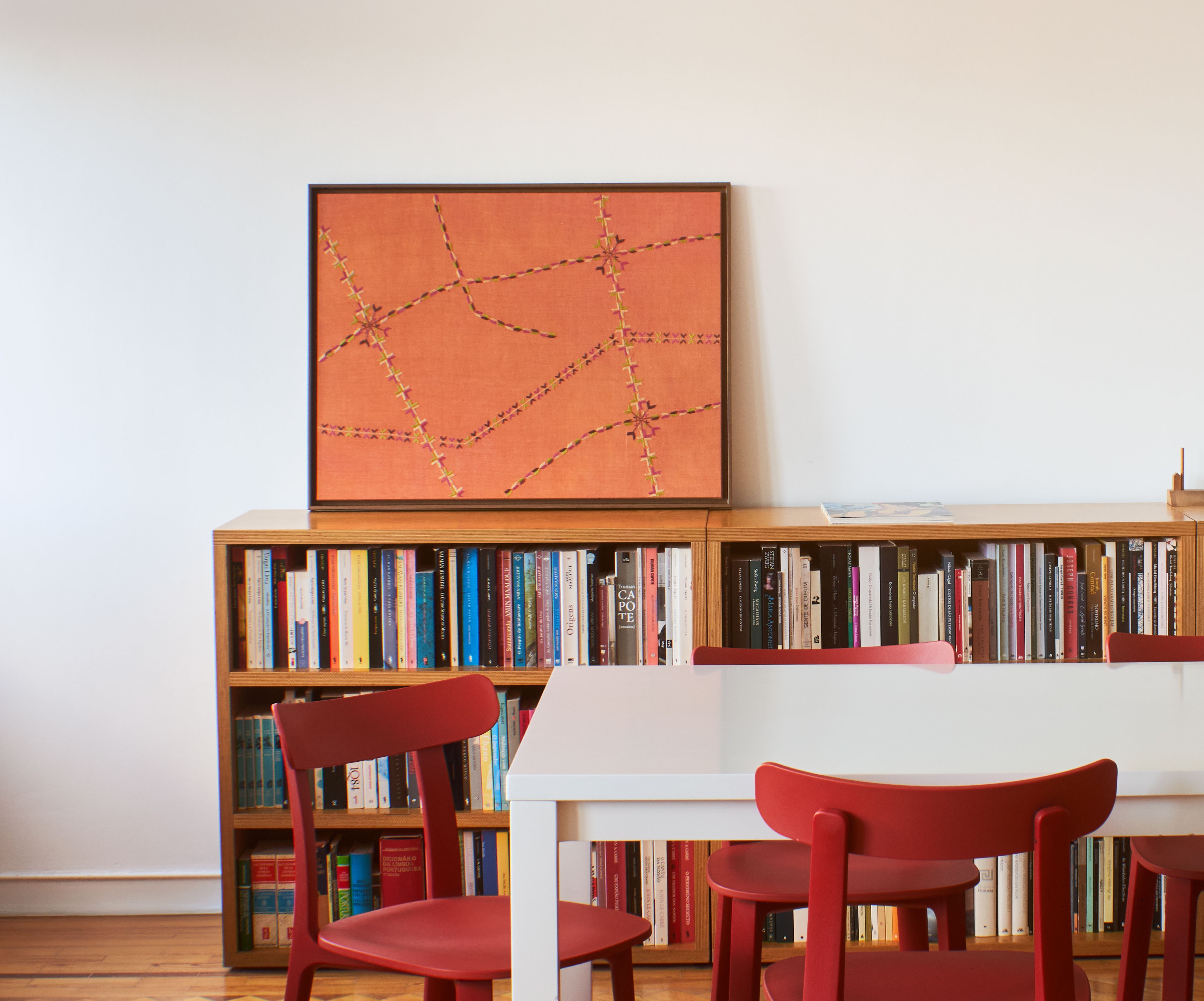
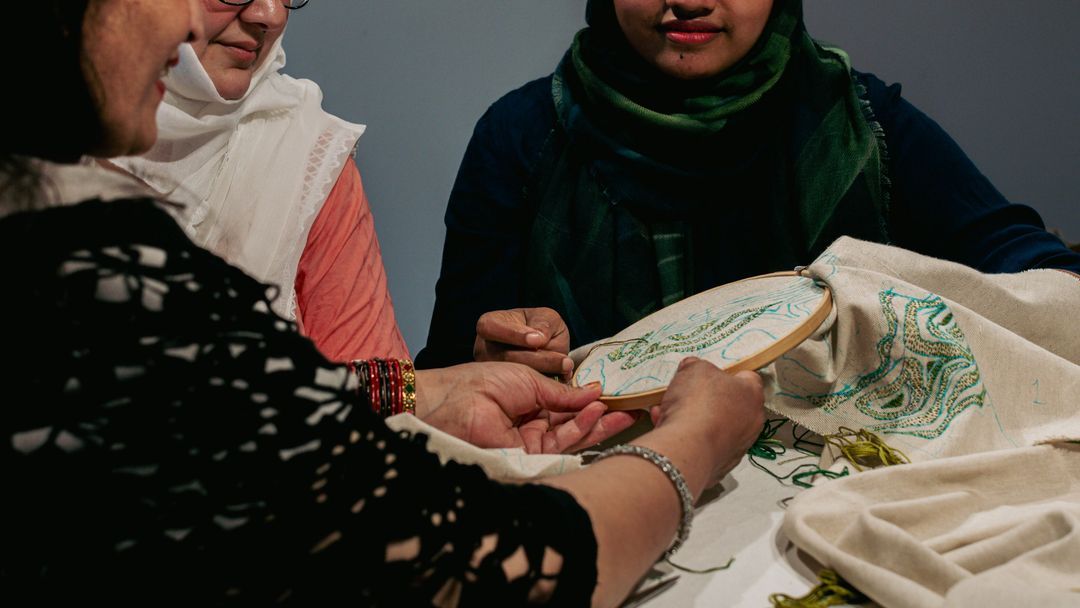
In the medieval town of Ourém, where the border between the Muslim South and the Christian North was once drawn and redrawn by conquest and treaty, a new act of cartography unfolds. Immigrant women — themselves border-crossers — take up needle and thread to reimagine what it means to draw a line.
The project situates itself at the intersection of medieval history and contemporary migration, asking: who has the authority to define borders, and what happens when those who have been bordered begin to map?
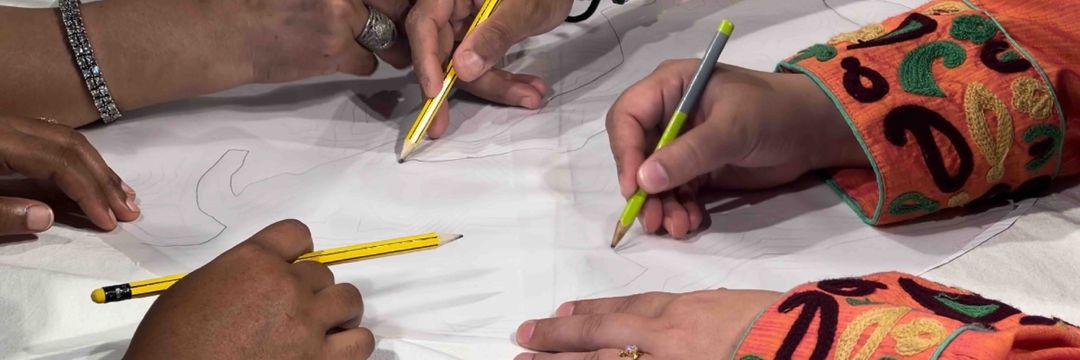
The embroidered maps serve as a critique of cartographic power. By adopting the colonizer's method — the map — and subverting it through craft, the works expose the violence inherent in the act of mapping. Every border on a map is a line drawn over someone's life.
The participants reclaim this tool, not to assert territory, but to reveal the emotional and psychological landscapes that official maps erase. Their stitched lines trace routes of longing, memory, and the daily negotiations of living in a place that is both home and not-home.
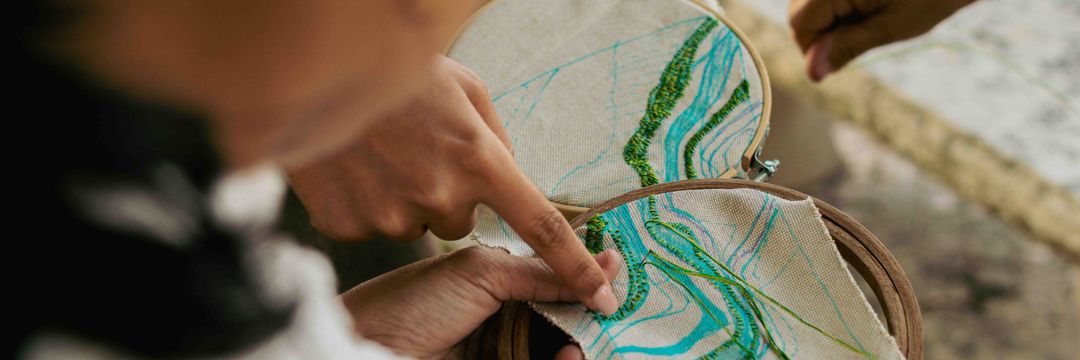
The medium itself carries meaning. The organic, nature-like quality of the stitches — resembling roots, veins, rivers — speaks to an ecological reality where borders are human inventions imposed upon a continuous landscape. The thread does not recognize frontiers.
In choosing embroidery — a craft historically dismissed as “women's work” — the project elevates the domestic to the political, the ornamental to the critical. Each stitch is a small act of defiance: a refusal to be invisible, a claim to presence, a line that says “I am here.”